The Leary Rose is a communication model
The Leary Rose is also covered during our communication coaching session.
The Leary Rose is a communication model that helps explain and understand the dynamics of interpersonal communication. Developed by psychologist Timothy Leary, the model illustrates the different levels of communication that can occur between individuals and how these can affect the overall quality of a relationship.
By using the Leary Rose communication model, individuals can gain a better understanding of their own communication style and how it affects their interactions with others. This model can also be used to improve communication skills and develop more positive and effective relationships, both personally and professionally.
The horizontal axis focuses on relationships with others, while the vertical axis focuses on attitudes towards others.
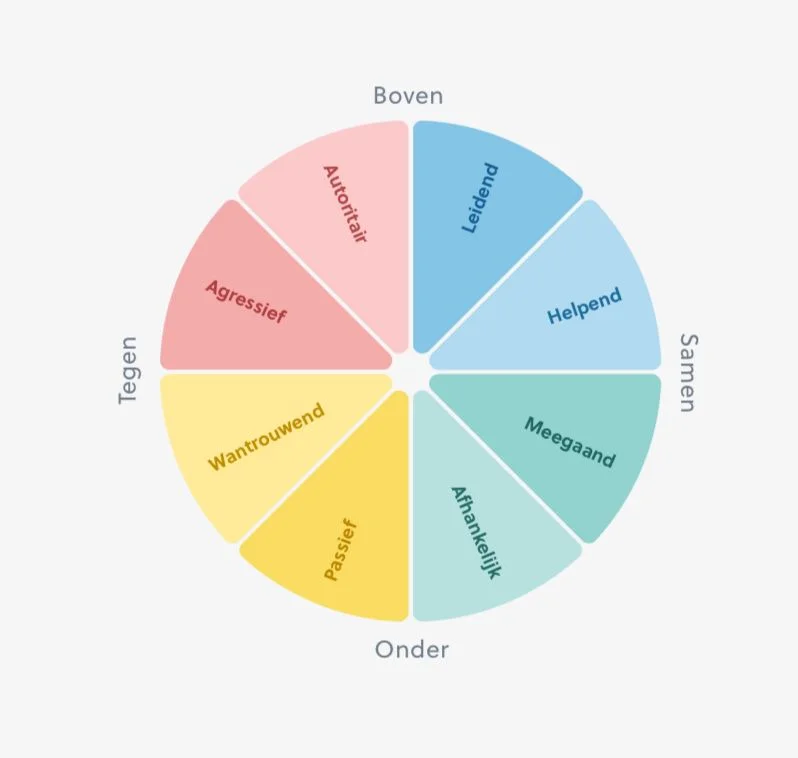 Timothy Leary called the north axis dominant behaviour, the south axis submissive behaviour, the west axis opposing behaviour and the east axis cooperative behaviour. He distinguishes additional nuances within these four basic behaviours, such as dominant-cooperative, dominant-opposing, submissive-cooperative and submissive-opposing.
Dominant behaviour
Dominant behaviour involves active, initiating and leading behaviour. The degree of dominance is determined by the other party.
Submissive behaviour
Submissive behaviour involves compliant behaviour; the individual does not get involved, withdraws or behaves very modestly.
Opposing behaviour
Oppositional behaviour involves people who are aggressive and do not simply agree with others. They want thorough explanations and reasons before taking action. This can develop into challenging behaviour.
Cooperative behaviour
This concerns an ideal situation in which people can work as a team and are open to the opinions of others.
The horizontal axis focuses on relationships with others, while the vertical axis focuses on attitudes towards others.
Timothy Leary called the north axis dominant behaviour, the south axis submissive behaviour, the west axis opposing behaviour and the east axis cooperative behaviour. He distinguishes additional nuances within these four basic behaviours, such as dominant-cooperative, dominant-opposing, submissive-cooperative and submissive-opposing.
Dominant behaviour
Dominant behaviour involves active, initiating and leading behaviour. The degree of dominance is determined by the other party.
Submissive behaviour
Submissive behaviour involves compliant behaviour; the individual does not get involved, withdraws or behaves very modestly.
Opposing behaviour
Oppositional behaviour involves people who are aggressive and do not simply agree with others. They want thorough explanations and reasons before taking action. This can develop into challenging behaviour.
Cooperative behaviour
This concerns an ideal situation in which people can work as a team and are open to the opinions of others.